Buy geschenkidee.eu ?
We are moving the project
geschenkidee.eu .
Are you interested in purchasing the domain
geschenkidee.eu ?
domain@kv-gmbh.de · 0541-91531010
Buy geschenkidee.eu ?
When do we use the Simple Present Passive, the Simple Past Passive, and the Present Perfect Simple Passive in English?
We use the Simple Present Passive when we want to talk about actions that are happening in the present and the focus is on the action rather than the doer. The Simple Past Passive is used when we want to talk about actions that happened in the past and the focus is on the action itself. The Present Perfect Simple Passive is used when we want to talk about actions that were completed in the past but have relevance to the present. **
When is Present Progressive passive used?
Present Progressive passive is used when the focus is on the action or process that is happening to the subject at the moment of speaking. It is formed by using a form of "to be" (am, is, are) followed by the past participle of the main verb and the present participle of the verb "to be" (being). This tense is often used to describe ongoing actions or situations that are currently taking place without specifying who is performing the action. **

Similar search terms for Passive
Top-Angebote
Products related to Passive:
-
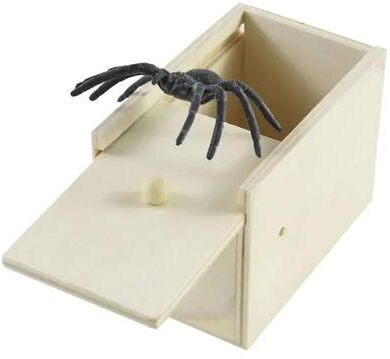
Inspired Living Surprise Spider Prank Box Wooden Prank Toy And Halloween Gag Gift Surprise Spider Prank Box Wooden Prank Toy And Halloween Gag GiftCuriosity turns into laughter the moment the lid begins to slide. This reusable wooden prank toy hides a lifelike spider that swings forward for a perfectly timed surprise. Made for playful pranksters, families, and party hosts, it creates memorable...22,97 $*Shipping: 0,00 $Secure redirect to the provider
-
Perfect Picks Market Potato Chip Snake Magic Trick Toy Gag Gift & Party Prank Surprise Potato Chip Snake Magic Trick Toy Gag Gift & Party Prank SurpriseSurprise and delight your friends with the ultimate prank! The Potato Chip Snake Magic Trick Toy pops out of a simple can, instantly transforming an ordinary moment into a hilarious, spooky, or jawdropping experience. Perfect for pranksters, party...31,97 $*Shipping: 0,00 $Secure redirect to the provider
-
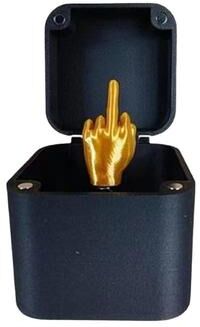
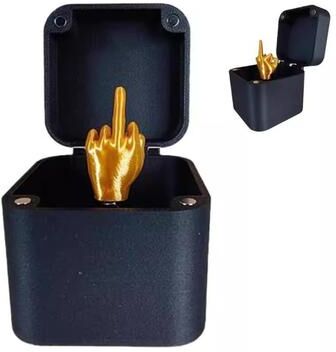
Inspire Curations 3D Printed Middle Finger Surprise Box Screw On Prank Gift pop up GiftTurn an innocentlooking present into an unforgettable joke with this middle finger prank box. Designed as a 3Dprinted surprise toy, the box hides a cheeky middlefinger figure that appears when the recipient finally opens it. Screwstyle prank...40,50 $*Shipping: 0,00 $Secure redirect to the provider
-
Youfap Market Jumping Middle Finger Prank Gift Box, Funny Surprise Trick Toy For Parties Jumping Middle Finger Prank Gift Box, Funny Surprise Trick Toy For PartiesGet ready for the perfect surprise with the Jumping Middle Finger Prank Gift Box. This hilarious trick toy is designed to shock and entertain at any party or festival. Inside the box, you'll find a funny prank that is sure to leave your guests...29,97 $*Shipping: 0,00 $Secure redirect to the provider


-
What is the present perfect passive?
The present perfect passive is a verb form that indicates an action that has been completed in the past, but the focus is on the result or the consequences of the action in the present. It is formed by using the auxiliary verb "have" or "has" in the present perfect tense, followed by the past participle of the main verb, and the passive voice structure. For example, "The report has been written by the team" is a sentence in the present perfect passive form. **
-
How do you translate the infinitive present passive?
To translate the infinitive present passive, you typically start with the English infinitive form of the verb, then add the appropriate form of the verb "to be" in the target language, followed by the past participle of the main verb. For example, in Spanish, you would use the verb "ser" in the present tense, followed by the past participle of the main verb. This structure helps convey the passive voice in the target language while maintaining the present tense aspect of the original infinitive form. **
-
Is the passive simple present or past used?
The passive voice can be used in both the simple present and simple past tenses. In the simple present, the passive voice is formed using the present tense of the verb "to be" (am, is, are) followed by the past participle of the main verb. In the simple past, the passive voice is formed using the past tense of the verb "to be" (was, were) followed by the past participle of the main verb. Both tenses are used to emphasize the action or the receiver of the action rather than the doer. **
-
Can someone explain the difference between the past progressive passive and the present progressive passive to me?
The past progressive passive is used to describe an action that was ongoing in the past and was being done to the subject. For example, "The cake was being baked by the chef." On the other hand, the present progressive passive is used to describe an action that is currently ongoing in the present and is being done to the subject. For example, "The house is being painted by the workers." In both cases, the action is passive because the subject is receiving the action rather than performing it. **


What is the difference between the present active and the present passive?
The present active voice is when the subject of the sentence performs the action, while the present passive voice is when the subject receives the action. In the present active, the subject is the doer of the action, whereas in the present passive, the subject is the receiver of the action. For example, in the sentence "The cat chases the mouse" (present active), the cat is the one performing the action, while in "The mouse is chased by the cat" (present passive), the mouse is receiving the action. **
What is the difference between causative passive and passive?
The main difference between causative passive and passive is the level of control over the action. In passive voice, the subject of the sentence is the receiver of the action, while in causative passive, the subject causes someone else to do the action. For example, in passive voice, "The book was read by the student," the student is the receiver of the action. In causative passive, "The teacher had the student read the book," the student is being caused to perform the action by the teacher. **
Top-Angebote
Products related to Passive:
-
United Middle Finger Surprise Prank Gift Box Funny Gag Gift Box Novelty Toy Middle Finger Surprise Prank Gift Box Funny Gag Gift Box Novelty ToyLooking for a gift that instantly breaks the ice and delivers unforgettable laughs This prank gift box is designed to surprise, shock, and entertain in the most unexpected way. Inside this cleverly designed package hides a bold and humorous twist...34,97 $*Shipping: 0,00 $Secure redirect to the provider
-
Uplift Essentials The CheekyBox Pop Up Middle Finger Surprise Prank Gift The CheekyBox Pop Up Middle Finger Surprise Prank GiftFinding a gift that genuinely surprises someone and sparks instant, uncontrolled laughter can feel almost impossible. This brilliant middle finger novelty Christmas prank gift completely solves that problem by packaging unmatched, bold humor inside...32,97 $*Shipping: 0,00 $Secure redirect to the provider
-
Inspired Living Surprise Spider Prank Box Wooden Prank Toy And Halloween Gag Gift Surprise Spider Prank Box Wooden Prank Toy And Halloween Gag GiftCuriosity turns into laughter the moment the lid begins to slide. This reusable wooden prank toy hides a lifelike spider that swings forward for a perfectly timed surprise. Made for playful pranksters, families, and party hosts, it creates memorable...22,97 $*Shipping: 0,00 $Secure redirect to the provider
-
Perfect Picks Market Potato Chip Snake Magic Trick Toy Gag Gift & Party Prank Surprise Potato Chip Snake Magic Trick Toy Gag Gift & Party Prank SurpriseSurprise and delight your friends with the ultimate prank! The Potato Chip Snake Magic Trick Toy pops out of a simple can, instantly transforming an ordinary moment into a hilarious, spooky, or jawdropping experience. Perfect for pranksters, party...31,97 $*Shipping: 0,00 $Secure redirect to the provider
-
When do we use the Simple Present Passive, the Simple Past Passive, and the Present Perfect Simple Passive in English?
We use the Simple Present Passive when we want to talk about actions that are happening in the present and the focus is on the action rather than the doer. The Simple Past Passive is used when we want to talk about actions that happened in the past and the focus is on the action itself. The Present Perfect Simple Passive is used when we want to talk about actions that were completed in the past but have relevance to the present. **
-
When is Present Progressive passive used?
Present Progressive passive is used when the focus is on the action or process that is happening to the subject at the moment of speaking. It is formed by using a form of "to be" (am, is, are) followed by the past participle of the main verb and the present participle of the verb "to be" (being). This tense is often used to describe ongoing actions or situations that are currently taking place without specifying who is performing the action. **
-
What is the present perfect passive?
The present perfect passive is a verb form that indicates an action that has been completed in the past, but the focus is on the result or the consequences of the action in the present. It is formed by using the auxiliary verb "have" or "has" in the present perfect tense, followed by the past participle of the main verb, and the passive voice structure. For example, "The report has been written by the team" is a sentence in the present perfect passive form. **
-
How do you translate the infinitive present passive?
To translate the infinitive present passive, you typically start with the English infinitive form of the verb, then add the appropriate form of the verb "to be" in the target language, followed by the past participle of the main verb. For example, in Spanish, you would use the verb "ser" in the present tense, followed by the past participle of the main verb. This structure helps convey the passive voice in the target language while maintaining the present tense aspect of the original infinitive form. **
Similar search terms for Passive
-
Inspire Curations 3D Printed Middle Finger Surprise Box Screw On Prank Gift pop up GiftTurn an innocentlooking present into an unforgettable joke with this middle finger prank box. Designed as a 3Dprinted surprise toy, the box hides a cheeky middlefinger figure that appears when the recipient finally opens it. Screwstyle prank...40,50 $*Shipping: 0,00 $Secure redirect to the provider
-
Youfap Market Jumping Middle Finger Prank Gift Box, Funny Surprise Trick Toy For Parties Jumping Middle Finger Prank Gift Box, Funny Surprise Trick Toy For PartiesGet ready for the perfect surprise with the Jumping Middle Finger Prank Gift Box. This hilarious trick toy is designed to shock and entertain at any party or festival. Inside the box, you'll find a funny prank that is sure to leave your guests...29,97 $*Shipping: 0,00 $Secure redirect to the provider
-
Lush Living Finds Flexible Joints, Printed Snake Surprise Egg Decoration, Ideal Gift For Printing Enthusiasts Flexible Joints, Printed Snake Surprise Egg Decoration, Ideal Gift For Printing EnthusiastsUnique and Fun Gift for Printing Enthusiasts The Printed Snake Surprise Egg Decoration 4 pcs is a musthave for anyone who loves unique and collectible items. Designed with flexible joints, this decoration offers a fun and interactive experience that...49,97 $*Shipping: 0,00 $Secure redirect to the provider
-
Inspire Curations Middle Finger Surprise Box Prank Gift Box Funny Desk Toy & Novelty Gag Gift 3pcsDeliver laughs with this hilarious prank gift box that hides an unexpected surprise inside. At first glance, it looks like an ordinary decorative box, but when opened, it reveals a cheeky middle finger that's sure to catch friends, family, or...125,50 $*Shipping: 0,00 $Secure redirect to the provider
-
Is the passive simple present or past used?
The passive voice can be used in both the simple present and simple past tenses. In the simple present, the passive voice is formed using the present tense of the verb "to be" (am, is, are) followed by the past participle of the main verb. In the simple past, the passive voice is formed using the past tense of the verb "to be" (was, were) followed by the past participle of the main verb. Both tenses are used to emphasize the action or the receiver of the action rather than the doer. **
-
Can someone explain the difference between the past progressive passive and the present progressive passive to me?
The past progressive passive is used to describe an action that was ongoing in the past and was being done to the subject. For example, "The cake was being baked by the chef." On the other hand, the present progressive passive is used to describe an action that is currently ongoing in the present and is being done to the subject. For example, "The house is being painted by the workers." In both cases, the action is passive because the subject is receiving the action rather than performing it. **
-
What is the difference between the present active and the present passive?
The present active voice is when the subject of the sentence performs the action, while the present passive voice is when the subject receives the action. In the present active, the subject is the doer of the action, whereas in the present passive, the subject is the receiver of the action. For example, in the sentence "The cat chases the mouse" (present active), the cat is the one performing the action, while in "The mouse is chased by the cat" (present passive), the mouse is receiving the action. **
-
What is the difference between causative passive and passive?
The main difference between causative passive and passive is the level of control over the action. In passive voice, the subject of the sentence is the receiver of the action, while in causative passive, the subject causes someone else to do the action. For example, in passive voice, "The book was read by the student," the student is the receiver of the action. In causative passive, "The teacher had the student read the book," the student is being caused to perform the action by the teacher. **
* All prices are inclusive of VAT and, if applicable, plus shipping costs. The offer information is based on the details provided by the respective shop and is updated through automated processes. Real-time updates do not occur, so deviations can occur in individual cases. ** Note: Parts of this content were created by AI.