Buy geschenkidee.eu ?
We are moving the project
geschenkidee.eu .
Are you interested in purchasing the domain
geschenkidee.eu ?
domain@kv-gmbh.de · 0541-91531010
Buy geschenkidee.eu ?
What are the Latin forms of the present participle, perfect passive participle, and future active participle?
The Latin present participle is formed by adding -ns, -ntis to the present stem of the verb. For example, the present participle of the verb "amo" (I love) is "amans, amantis" (loving). The perfect passive participle is formed by adding -us, -a, -um to the verb stem. For example, the perfect passive participle of the verb "amo" is "amatus, amata, amatum" (loved). The future active participle is formed by adding -urus, -ura, -urum to the verb stem. For example, the future active participle of the verb "amo" is "amaturus, amatura, amaturum" (about to love). **
What is the difference between the past participle and the present participle?
The past participle is a verb form used to indicate a completed action or state that occurred in the past. It is often used with auxiliary verbs to form the perfect tenses (e.g., "has eaten," "had gone"). The present participle, on the other hand, is a verb form used to indicate an ongoing action or state in the present or future. It is formed by adding "-ing" to the base form of the verb and is used to create the progressive tenses (e.g., "is eating," "will be going"). **

Similar search terms for Participle
Top-Angebote
Products related to Participle:
-
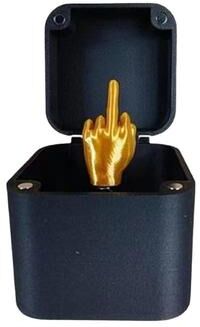
Uplift Essentials The CheekyBox Pop Up Middle Finger Surprise Prank Gift The CheekyBox Pop Up Middle Finger Surprise Prank GiftFinding a gift that genuinely surprises someone and sparks instant, uncontrolled laughter can feel almost impossible. This brilliant middle finger novelty Christmas prank gift completely solves that problem by packaging unmatched, bold humor inside...32,97 $*Shipping: 0,00 $Secure redirect to the provider
-
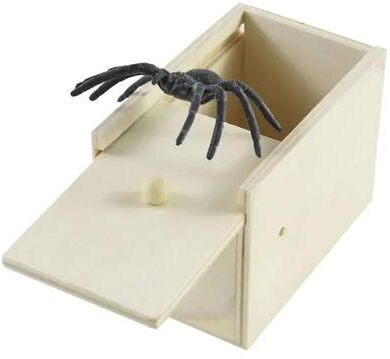
Inspired Living Surprise Spider Prank Box Wooden Prank Toy And Halloween Gag Gift Surprise Spider Prank Box Wooden Prank Toy And Halloween Gag GiftCuriosity turns into laughter the moment the lid begins to slide. This reusable wooden prank toy hides a lifelike spider that swings forward for a perfectly timed surprise. Made for playful pranksters, families, and party hosts, it creates memorable...22,97 $*Shipping: 0,00 $Secure redirect to the provider
-
Perfect Picks Market Potato Chip Snake Magic Trick Toy Gag Gift & Party Prank Surprise Potato Chip Snake Magic Trick Toy Gag Gift & Party Prank SurpriseSurprise and delight your friends with the ultimate prank! The Potato Chip Snake Magic Trick Toy pops out of a simple can, instantly transforming an ordinary moment into a hilarious, spooky, or jawdropping experience. Perfect for pranksters, party...31,97 $*Shipping: 0,00 $Secure redirect to the provider
-
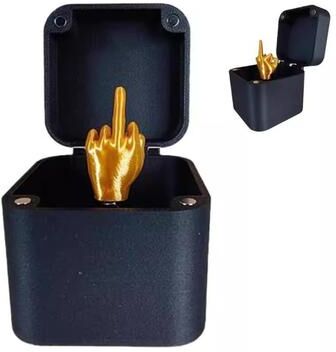
Inspire Curations 3D Printed Middle Finger Surprise Box Screw On Prank Gift pop up GiftTurn an innocentlooking present into an unforgettable joke with this middle finger prank box. Designed as a 3Dprinted surprise toy, the box hides a cheeky middlefinger figure that appears when the recipient finally opens it. Screwstyle prank...40,50 $*Shipping: 0,00 $Secure redirect to the provider



-
When is the present participle used?
The present participle is used to form the progressive tenses in English, such as "I am running" or "She is studying." It can also be used as an adjective to describe ongoing actions or characteristics, as in "The running water" or "The crying baby." Additionally, the present participle is used in reduced adjective clauses, where it provides additional information about a noun, like in "The man standing over there is my brother." **
-
How can the terms premature, simultaneous, and subsequent be explained in relation to past participle, present participle, and future participle?
The terms premature, simultaneous, and subsequent can be explained in relation to past participle, present participle, and future participle based on their timing in relation to the action of the verb. The past participle refers to an action that has already been completed, making it premature in relation to the present moment. The present participle refers to an action that is happening at the same time as something else, making it simultaneous. The future participle refers to an action that will happen at a later time, making it subsequent to the present moment. These terms help to clarify the timing of the action in relation to the verb. **
-
What is the Latin present active participle?
The Latin present active participle is a verbal adjective that describes an ongoing action being performed by the subject of the sentence. It is formed by adding the suffix "-ns" to the present stem of a verb. The present active participle can be used to convey simultaneous or ongoing actions in Latin sentences. **
-
What is the Latin translation with Perfect Passive Participle (PPP) and Present Active Participle (PPA)?
The Latin translation with Perfect Passive Participle (PPP) and Present Active Participle (PPA) would be "factus" and "faciens" respectively. "Factus" is the PPP of the verb "facio," meaning "to do" or "to make," and it indicates an action that has been completed in the past. "Faciens" is the PPA of the same verb and it indicates an ongoing or continuous action in the present. **

What is the difference between Present Progressive and Present Participle?
The present progressive tense is used to describe an ongoing action that is happening at the current moment. It is formed by using the verb "to be" in the present tense, followed by the present participle of the main verb. The present participle, on the other hand, is the -ing form of a verb and is used to form the present progressive tense, as well as to create continuous verb forms in other tenses. In summary, the present progressive is a specific tense used to describe ongoing actions, while the present participle is the -ing form of a verb that is used to form the present progressive tense and other continuous verb forms. **
Is the present participle a part of speech?
The present participle is not considered a separate part of speech on its own. Instead, it is a verb form that is used to indicate ongoing or continuous action. It is formed by adding "-ing" to the base form of a verb. The present participle can be used in various ways in a sentence, such as forming progressive tenses or as an adjective. **
Top-Angebote
Products related to Participle:
-
United Middle Finger Surprise Prank Gift Box Funny Gag Gift Box Novelty Toy Middle Finger Surprise Prank Gift Box Funny Gag Gift Box Novelty ToyLooking for a gift that instantly breaks the ice and delivers unforgettable laughs This prank gift box is designed to surprise, shock, and entertain in the most unexpected way. Inside this cleverly designed package hides a bold and humorous twist...34,97 $*Shipping: 0,00 $Secure redirect to the provider
-
Kheper Games Sex! Crackers - Erotic Surprise GiftSurprise your partner with an exciting erotic gift - the Kheper Games Sex! Crackers' two surprise packages promise hot experiences!Why is the Kheper Games Sex! Crackers Erotic Surprise Gift a Good Choice?The Kheper Games Sex! Crackers is a perfect choice to spice up your evening with a special and playful surprise. The package contains two crackers - one for him and one for her - packed with sex toys, task cards, and erotic accessories waiting to be discovered. This gift is funny, exciting, and sensual, bringing passion and variety to every couple's life.Why Customers Love the Kheper Games Sex! Crackers GiftDouble Surprise - one cracker for the man, one cracker for the woman.Erotic Games and Tools - each opening offers a new discovery.Playful Atmosphere - guaranteed to enhance holidays or shared evenings.Strengthens Intimacy - helps you grow closer together while exploring new experiences.Package ContentsFor Him Cracker: penis ring, 3 SEX! scratch-off cards with sex positions, 3 sex position cards, heart-shaped confettiFor Her Cracker: mini bullet vibrator, SEX! dice with 6 sex positions, 3 sex position cards, heart-shaped confettiProduct FeaturesDimensions: 31.80 x 10.20 x 5.10 cmPackaging: 2 crackers (one for men, one for women)Type: erotic gift / party game accessoryBrand: Kheper GamesThings to Keep in Mind When Using Kheper Games Sex! Crackers:The essence of the game is shared discovery and consent, so always communicate openly with each other. Use water-based lubricant with the mini vibrator for maximum comfort, and remember to clean it after each use for a hygienic experience.User manual17,26 £*Shipping: 6,10 £Secure redirect to the provider
-
Uplift Essentials The CheekyBox Pop Up Middle Finger Surprise Prank Gift The CheekyBox Pop Up Middle Finger Surprise Prank GiftFinding a gift that genuinely surprises someone and sparks instant, uncontrolled laughter can feel almost impossible. This brilliant middle finger novelty Christmas prank gift completely solves that problem by packaging unmatched, bold humor inside...32,97 $*Shipping: 0,00 $Secure redirect to the provider
-
Inspired Living Surprise Spider Prank Box Wooden Prank Toy And Halloween Gag Gift Surprise Spider Prank Box Wooden Prank Toy And Halloween Gag GiftCuriosity turns into laughter the moment the lid begins to slide. This reusable wooden prank toy hides a lifelike spider that swings forward for a perfectly timed surprise. Made for playful pranksters, families, and party hosts, it creates memorable...22,97 $*Shipping: 0,00 $Secure redirect to the provider
-
What are the Latin forms of the present participle, perfect passive participle, and future active participle?
The Latin present participle is formed by adding -ns, -ntis to the present stem of the verb. For example, the present participle of the verb "amo" (I love) is "amans, amantis" (loving). The perfect passive participle is formed by adding -us, -a, -um to the verb stem. For example, the perfect passive participle of the verb "amo" is "amatus, amata, amatum" (loved). The future active participle is formed by adding -urus, -ura, -urum to the verb stem. For example, the future active participle of the verb "amo" is "amaturus, amatura, amaturum" (about to love). **
-
What is the difference between the past participle and the present participle?
The past participle is a verb form used to indicate a completed action or state that occurred in the past. It is often used with auxiliary verbs to form the perfect tenses (e.g., "has eaten," "had gone"). The present participle, on the other hand, is a verb form used to indicate an ongoing action or state in the present or future. It is formed by adding "-ing" to the base form of the verb and is used to create the progressive tenses (e.g., "is eating," "will be going"). **
-
When is the present participle used?
The present participle is used to form the progressive tenses in English, such as "I am running" or "She is studying." It can also be used as an adjective to describe ongoing actions or characteristics, as in "The running water" or "The crying baby." Additionally, the present participle is used in reduced adjective clauses, where it provides additional information about a noun, like in "The man standing over there is my brother." **
-
How can the terms premature, simultaneous, and subsequent be explained in relation to past participle, present participle, and future participle?
The terms premature, simultaneous, and subsequent can be explained in relation to past participle, present participle, and future participle based on their timing in relation to the action of the verb. The past participle refers to an action that has already been completed, making it premature in relation to the present moment. The present participle refers to an action that is happening at the same time as something else, making it simultaneous. The future participle refers to an action that will happen at a later time, making it subsequent to the present moment. These terms help to clarify the timing of the action in relation to the verb. **
Similar search terms for Participle
-
Perfect Picks Market Potato Chip Snake Magic Trick Toy Gag Gift & Party Prank Surprise Potato Chip Snake Magic Trick Toy Gag Gift & Party Prank SurpriseSurprise and delight your friends with the ultimate prank! The Potato Chip Snake Magic Trick Toy pops out of a simple can, instantly transforming an ordinary moment into a hilarious, spooky, or jawdropping experience. Perfect for pranksters, party...31,97 $*Shipping: 0,00 $Secure redirect to the provider
-
Inspire Curations 3D Printed Middle Finger Surprise Box Screw On Prank Gift pop up GiftTurn an innocentlooking present into an unforgettable joke with this middle finger prank box. Designed as a 3Dprinted surprise toy, the box hides a cheeky middlefinger figure that appears when the recipient finally opens it. Screwstyle prank...40,50 $*Shipping: 0,00 $Secure redirect to the provider
-
Youfap Market Jumping Middle Finger Prank Gift Box, Funny Surprise Trick Toy For Parties Jumping Middle Finger Prank Gift Box, Funny Surprise Trick Toy For PartiesGet ready for the perfect surprise with the Jumping Middle Finger Prank Gift Box. This hilarious trick toy is designed to shock and entertain at any party or festival. Inside the box, you'll find a funny prank that is sure to leave your guests...29,97 $*Shipping: 0,00 $Secure redirect to the provider
-
Lush Living Finds Flexible Joints, Printed Snake Surprise Egg Decoration, Ideal Gift For Printing Enthusiasts Flexible Joints, Printed Snake Surprise Egg Decoration, Ideal Gift For Printing EnthusiastsUnique and Fun Gift for Printing Enthusiasts The Printed Snake Surprise Egg Decoration 4 pcs is a musthave for anyone who loves unique and collectible items. Designed with flexible joints, this decoration offers a fun and interactive experience that...49,97 $*Shipping: 0,00 $Secure redirect to the provider
-
What is the Latin present active participle?
The Latin present active participle is a verbal adjective that describes an ongoing action being performed by the subject of the sentence. It is formed by adding the suffix "-ns" to the present stem of a verb. The present active participle can be used to convey simultaneous or ongoing actions in Latin sentences. **
-
What is the Latin translation with Perfect Passive Participle (PPP) and Present Active Participle (PPA)?
The Latin translation with Perfect Passive Participle (PPP) and Present Active Participle (PPA) would be "factus" and "faciens" respectively. "Factus" is the PPP of the verb "facio," meaning "to do" or "to make," and it indicates an action that has been completed in the past. "Faciens" is the PPA of the same verb and it indicates an ongoing or continuous action in the present. **
-
What is the difference between Present Progressive and Present Participle?
The present progressive tense is used to describe an ongoing action that is happening at the current moment. It is formed by using the verb "to be" in the present tense, followed by the present participle of the main verb. The present participle, on the other hand, is the -ing form of a verb and is used to form the present progressive tense, as well as to create continuous verb forms in other tenses. In summary, the present progressive is a specific tense used to describe ongoing actions, while the present participle is the -ing form of a verb that is used to form the present progressive tense and other continuous verb forms. **
-
Is the present participle a part of speech?
The present participle is not considered a separate part of speech on its own. Instead, it is a verb form that is used to indicate ongoing or continuous action. It is formed by adding "-ing" to the base form of a verb. The present participle can be used in various ways in a sentence, such as forming progressive tenses or as an adjective. **
* All prices are inclusive of VAT and, if applicable, plus shipping costs. The offer information is based on the details provided by the respective shop and is updated through automated processes. Real-time updates do not occur, so deviations can occur in individual cases. ** Note: Parts of this content were created by AI.